






Ready To Ship
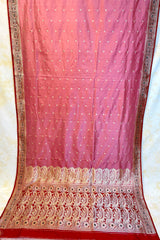
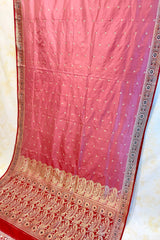
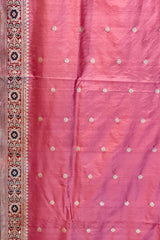
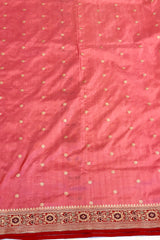
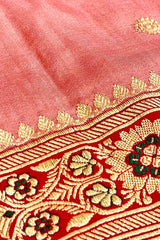
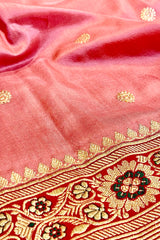
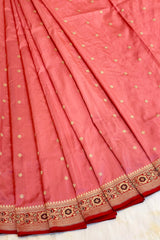
Gold Zari Handloom Kadhua Banarasi Shalu Silk Satin Saree - Small Border - Sangita - All Gold Zari - Peach Red
SKU: EX-SR-KTSLK-BAN-034
Tax included. Shipping calculated at checkout.
Handwoven In Gold Zari this Banarasi Saree is definitely is collectors item.
-
- Zari : Gold Silver Copper Pure Metal Zari
- Comes with a unstitched matching blouse material.
- Colour: Peach Red
- Fabric : 100 % Pure Silk
- Weaving technique: Banarasi Kadhua In Pure Zari
- Saree Length : 5.5mtrs
- Blouse Materia: 1 Mtr
- Slight variation in color is possible
- This product is completely MADE IN INDIA
- We take utmost pride in sourcing our products & materials sustainably
- This product is handwoven & hand embroidered in finest materials.
- There might be slight irregularities. But don’t you think that add to the beauty & exclusivity of the handmade products?
How to check a saree's authenticity before you buy
Real zari, handloom weaving and certification marks are three separate things. Here is what each one tells you, and how to check it yourself.
1. Turn the saree over: the reverse weave
On a genuine handwoven saree, the back of the pallu and butis shows loose floating threads where the weaver has carried the extra yarn across, and small knots or trimmed ends. A powerloom saree typically has a flat, uniform, almost machine-neat reverse with long continuous floats cut in even lines. In Kadhua weaving, each motif is woven separately, so the motifs are woven with interlocking technique (Kadhua meaning kadhna) rather than running continuously across the whole width.
2. Motif continuity and small irregularities
Hand weaving is never perfectly identical. Compare the same motif at two ends of the saree: slight variation in size, spacing or tension is a good sign. Perfect repetition down to the millimetre usually points to a powerloom. Look at where the border meets the body too, a handwoven join is worked in, not printed or stitched on. Hence no two handloom textiles are exactly the same.
3. Labels and what they genuinely prove
The Silk Mark label, issued by the Silk Mark Organisation of India, certifies one thing only: that the fabric is pure natural silk. It says nothing about whether the saree was handwoven or whether the zari is real. A Geographical Indication (GI) tag, such as the one for Banaras Brocades and Sarees, certifies that the product comes from the registered region and is made to the registered process. It is granted to authorised users, so it is about origin and method, not about silver or gold content in the zari.
Neither mark is a guarantee of real zari. Zari purity is a separate question. If a seller shows you a label, ask what specifically it certifies.
4. Ask three direct questions
Before buying any heirloom saree, ask the seller: Is it handloom or powerloom? What is the zari composition? Is there a Silk Mark, what all does it cover? A seller who knows their weavers will answer all three without hedging.
For More Information about House of Vaarasa's textiles and making pleas reach out to us on whatsapp message +917204401987